
- Main Page
Topics
- Bible vs. Mrs. White
- Visions Examined
- Top Shockers
- Myths/Fables
- Shut Door
- Health Teachings
- Confusing Statements
- Plagiarism
- 1844 Movement
- Contradictions
- Pioneer Documents
- Online Books
- Videos
- Commentary
- Testimonies
Most Popular Articles
- Secret Vice
- Head Injury
- Dammon Incident
- Prophet or Profit?
- Oysters and Herrings
Other Resources
- FAQ
- Web Store
- SDA Truth vs. Bible
- Amazing Fiction
- Church of God 7th Day
The Sabbath Confusion
By Dirk Anderson
For God is not the author of confusion (1 Corinthians 14:33)
Origin of Sabbath-keeping in the SDA Church
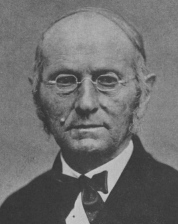
The foremost proponent of Sabbath-keeping among the "shut-door Adventists" was retired sea captain Joseph Bates. In the spring of 1845, Bates began keeping the Sabbath after learning the doctrine from a tract written by a Millerite preacher named Thomas M. Preble.1 When Joseph Bates tried to convince Ellen Harmon and James White about the Sabbath doctrine, Ellen dismissed it:
Elder Bates was keeping the Sabbath, and urged its importance. I did not feel its importance, and thought that Elder B. erred in dwelling upon the fourth commandment more than upon the other nine.2
However, after reading Bates' pamphlet on the subject, she changed her mind. SDA Professor Dalton Baldwin explains:
When James White and Ellen Harmon first learned about the Sabbath from Joseph Bates, they rejected it; but after they read his pamphlet on the subject, they began its observance. In his pamphlet Bates took the position that the Sabbath begins at 6:00 p.m.3
Confusion on when the Sabbath commences
How did Joseph Bates determine the Sabbath commenced at six o'clock p.m.? Arthur White explains his reasoning:
Joseph Bates, the apostle of the Sabbath truth, at the outset took the position that the Sabbath began at evening. Taking into account time problems in different parts of the world, Bates believed that the proper time to commence the Sabbath was equatorial time, or 6:00 P.M., the year around. This concept was generally accepted as men and women from the Adventist ranks began to keep the seventh-day Sabbath.4
While Bates and his group settled upon 6 p.m., not all were in agreement. In 1847, a controversy arose when some Sabbath-keepers in Maine claimed the Sabbath should be started at sunrise. Mrs. White had a "vision" that established Bates' teaching that the Sabbath commenced in the evening. James White writes:

In that vision she was shown that to commence the Sabbath at sunrise was wrong. She then heard an angel repeat these words, 'From even unto even shall ye celebrate your Sabbaths.' Brother Bates was present, and succeeded in satisfying all present that 'even' was six o'clock.5
While the Whites and Bates continued to keep the Sabbath from 6 p.m., a division arose among the shut-door Adventists in Connecticut. Some argued the Sabbath should commence at sundown. Fortunately for the Whites, a man in the church received a word in tongues establishing their position that the Sabbath began at 6 p.m. Arthur White describes the incident:
Writing from Berlin, Connecticut, on July 2, 1848, James White reported:there has been some division [in Connecticut] as to the time of beginning the Sabbath. Some commenced at sundown. Most, however, at 6:00 P.M. A week ago Sabbath we made this a subject of prayer. The Holy Ghost came down; Brother Chamberlain was filled with the power. In this state he cried out in an unknown tongue. The interpretation followed, which was this: "Give me the chalk. Give me the chalk."Well, thought I, if there is none in the house, then I shall doubt this, but in a moment a brother took down a good piece of chalk. Brother Chamberlain took it and in the power he drew this figure on the floor [a circle divided by crossing horizontal and vertical lines and the figures, 12, 3, 6, and 9 written in, as on the face of a clock].
This represents Jesus' words. Are there not twelve hours in the day? This figure represents the day or the last half of the day. Daylight is half gone when the sun is south or halfway from each horizon, at twelve o'clock. Now go each way six hours, and you will get the twelve-hour day. At any time a year, the day ends at 6:00 P.M. Here is where the Sabbath begins at 6:00 P.M.--JW to "My Dear Brother," July 2, 1848.
James White added, "Satan would get us from this time. But let us stand fast in the Sabbath as God has given it to us and Brother Bates. God has raised up Brother Bates to give this truth. I should have more faith in his opinion than any other man's."-- Ibid .6
Notice that James says they should hold firm to the time God gave "to us and Brother Bates." So it is apparent that the Whites believed that God gave them the six o'clock time. In fact, the belief was so strong, that James considered any questioning of that time to be the work of Satan!
The revelation of tongues seems to have settled the question for some, but further study in 1854-55 convinced others that 6 p.m. was the wrong time to start the Sabbath. Thomas Hamilton writes...
...it was discovered from the teachings of the Bible, by certain Advent Sabbatarians that the Sabbath did not commence at 6 o'clock as they had been instructed to believe by their vision led brethren, but at sunset. ...the anti-vision Sabbatarians practiced commencing the Sabbath at sunset, while the visionists continued to commence it at 6 o'clock. For at a certain previous meeting, where a knowledge of the right time of commencing the Sabbath, was professedly the burden of prayer, a clock dial was seen in vision with the hands standing plumb or perpendicular before the face! This was sufficient to settle that point with the visionists until the anti-visionists effectually unsettled it for them.7
It appears Ellen White's "vision" of a clock pointing to 6 p.m. was enough to convince those inclined to believe her visions that the Sabbath started at 6 p.m. Eventually, however, the Biblical evidence presented by the Bible-believing group became too weighty to argue against. The believers in Ellen White's "visions" were forced to reconsider the subject.
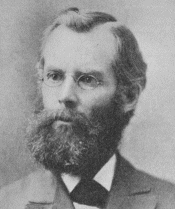 In 1855, Adventist pioneer J.N. Andrews was commissioned to study the subject and present his findings to a conference in 1855. Professor Baldwin reports that prior to the conference Bates still firmly held to the 6 p.m. start time based upon the visions of Ellen White:
Joseph Bates, who was apparently wedded to the 6:00 p.m. position with the conviction that it had been confirmed by the vision of Ellen White, had been made chairman of the conference.8
At the conference, Andrews presented compelling biblical evidence that the Sabbath commenced at sundown.9 Arthur White writes:
His conclusions, with supporting Scriptural evidence, were read at the general conference in Battle Creek in November, 1855, at the Sabbath morning service. Elder Andrews demonstrated from nine Old Testament and two New Testament texts that 'even' and 'evening' were identical with sunset. (Review and Herald, Dec. 4, 1855, p. 78, col. 2.)The sunset time was now accepted by nearly all present at the 1855 conference. Joseph Bates and Ellen White were exceptions, both holding to the six o'clock position.10
Despite the Biblical evidence presented, and despite the fact that the majority of the attendees agreed with Andrews, Mrs. White still clung to the 6 p.m. time. It is unclear why Mrs. White continued to cling to the 6 p.m. time.
- Did she feel the validity of her prior visions would be questioned if she adopted the new time?
- Was she afraid people would question why the angels had not made plain to her the correct start time of the Sabbath during any of the many "visions" she had received on the subject?
- Was she embarrassed that she had not been able to detect the erroneous view presented by the tongues-speaking brother Chamberlain?
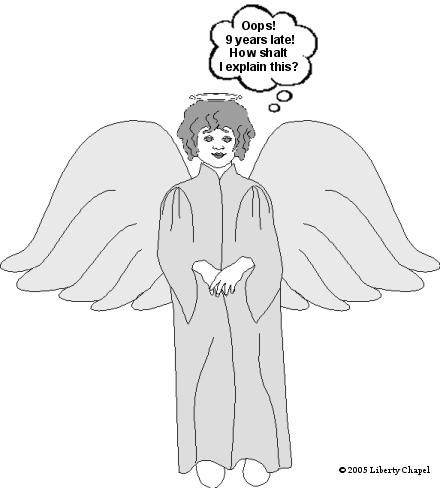
Better Late then Never!
Finally, at the close of the conference, after the majority of the brethren had already accepted the new start time, Ellen White had a "vision" endorsing the new view.11 Mrs. White must have felt keenly disappointed that the angels had been talking to her about the Sabbath for nearly 10 years, and yet never mentioned the correct start time. Instead, after the church prayed for guidance, she was shown a clock pointing at 6 p.m. She must have recognized that some would question her prophetic abilities. Confused, she questioned her spirit guide, asking for some type of an explanation:
I inquired why it had been thus, that at this late day we must change the time of commencing the Sabbath. Said the angel, 'Ye shall understand, but not yet, not yet.'12
The spirit guide (speaking in KJV-style Old English) said "ye shall understand," but there is no evidence Ellen White ever understood. To this day the confusion remains. The Sabbath was the central teaching of the shut-door Adventists during those nine years, with many articles and tracts written about its sacredness and the necessity of not working on the Sabbath. And yet, for nine years the angels did not even hint to Sister White that she and Bates were breaking the Sabbath when working on Friday evening after sundown or Sabbath evening before sundown. Then, after Andrews and James and the brethren had already concluded the Sabbath began at sundown, Mrs. White's angel finally arrived to tell her the Sabbath commenced at sundown. The conversation with the "angel" would have been far more convincing had it occurred prior to the conference, but as they say, better late than never!
See also
Citations
1. Preble, a freewill Baptist preacher adopted Sabbath-keeping in August, 1844. Preble wrote an article on the Sabbath that appeared in a Millerite magazine named Hope of Israel on February 28, 1845. Frederick Wheeler of New Hampshire is thought to be the first Millerite minister to start keeping the Sabbath, in March of 1844. He learned about it from a Seventh Day Baptist woman named Rachel Oakes (SDA Encyclopedia, entry on Rachel Oakes). Even though Preble brought the Sabbath to the attention of Bates and other early Adventists, Preble rejected Ellen White as a prophet (see D.M. Canright, Seventh-day Adventism Renounced, chapter 3).
2. Ellen G. White, Life Sketches of James White and Ellen G. White, (1880 edition), page 236.
3. Dalton D. Baldwin, Ph.D., "Openness for Renewal without Destructive Pluralism: The Dilemma of Doctrinal Dissent", Department of Theological and Historical Studies, School of Religion, Loma Linda University, Loma Linda, California. Citation from Joseph Bates, The Seventh Day Sabbath, A Perpetual Sign (New Bedford: Pres of Benjamin Lindsey, 1846), 31-32.
4. Arthur White, Ellen G. White: The Early Years Volume 1 - 1827-1862, p. 199.
5. op. cit. Baldwin: James White, "Time to Commence the Sabbath," Review and Herald, 31 (25 February 1868): 168.
6. Arthur White, pp. 199-200.
7. Thomas Hamilton, Hope of Israel vol. 1, no. 11, Oct. 23, 1866, p. 81.
8. Baldwin, Ibid..
9. op. cit. Baldwin: J. N. Andrew, "Time for Commencing the Sabbath," Review and Herald, 7(4 December 1855): 78.
10. Arthur White, Ellen G. White, Messenger to the Remnant, pp. 35-36.
11. Ellen G. White, Testimonies, vol. 1, p. 116.
12. Ibid.